| Check | What to look for | Who can do it |
|---|---|---|
| 1. Bypass valve | Handle in service, not bypass | You, in a minute |
| 2. Salt | Crust, mush or an empty tank | You, with a broom handle |
| 3. Hardness setting | Matches your measured hardness | You, with the manual |
| 4. Regeneration | Clock right, cycle actually runs | You first, then a technician |
| 5. Resin | Iron fouling or worn resin | A technician |
| 6. Sizing | Enough capacity for your home | A test and the math |
Bottom line: Work down the list in order, because the fixes get more expensive as you go.
Why is my water softener not working?
A water softener usually stops working because of a bypass valve left open, a salt problem, a wrong hardness setting, a missed regeneration, tired resin, or a system too small for the home. Most of these show up the same way: spots on glass, soap that will not lather, and scale coming back.
The University of Nebraska-Lincoln's softening guide gives a useful rule: if a unit appears to use more salt than expected, or the water is not softened, have the settings checked first. Check the cheap causes before you decide on a part. Our water softener service and repair page lists what a visit covers if the checks below do not find it.
Is the bypass valve open or half-turned?
Check the bypass valve first, because a softener on bypass sends hard water straight past the resin. The valve sits on the pipes at the back of the softener, as a handle, a knob or a push rod. Someone doing plumbing work may have moved it, and a half-turned handle can let some hard water through.
Set it to service, using the arrows or the label on the valve. If you are not sure which way is which, the brand and model on the valve head will find you the manual. Run a cold tap for a few minutes, then see whether the soap behaves differently.
Is there salt, and is it actually dissolving?
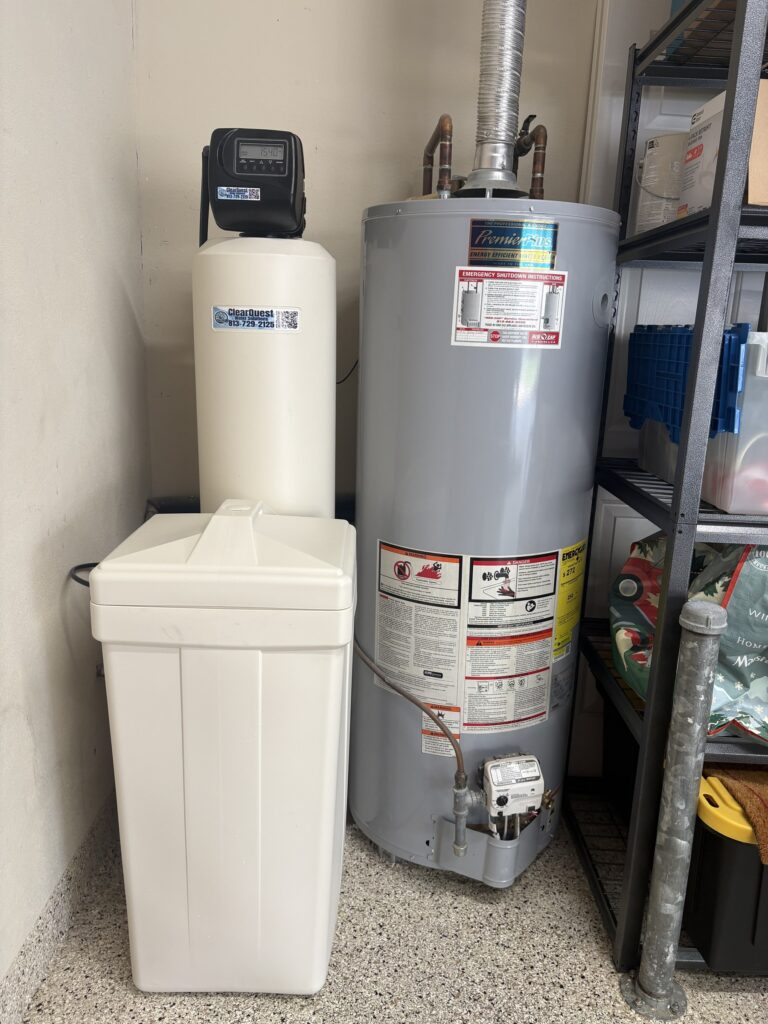
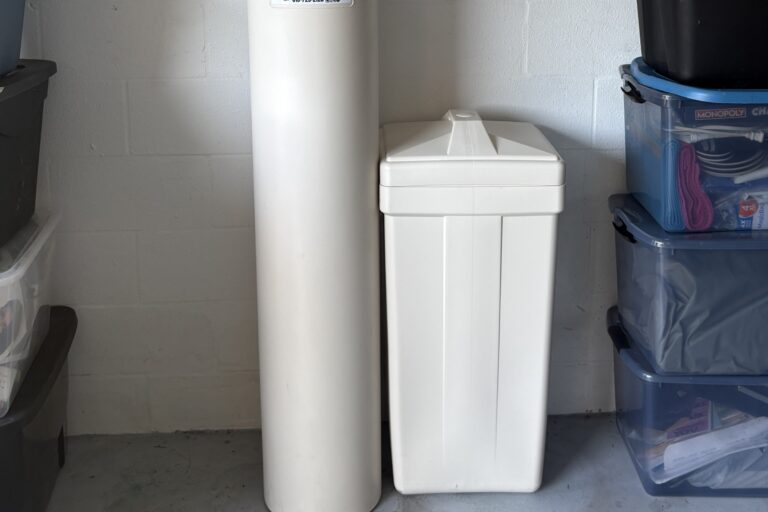
Check the salt next, because a softener can only regenerate with brine. A tank that looks full may hold a crust with a gap under it, called a salt bridge, or a layer of wet mush at the bottom. Push a broom handle straight down through the salt, and you will feel either one.
We covered this step in full in our guide to a water softener not using salt, including the injector and brine line. If the salt level drops normally and the water is still hard, move on. That points past the salt tank.
Is the hardness setting right for your water?
Check the hardness setting against a measured number, because a softener set too low runs out between regenerations and lets hard water through. The City of Tampa's 2025 water quality report puts its finished water at an average 12.3 grains per gallon, and ClearQuest's own readings across the area run from 9 to 18 grains per gallon in a convenience sample published in September 2026.
That spread is why you should use your own number, not a neighbor's. A previous owner may have set the valve for a different supply or a smaller household. Well owners should add for iron if the manual says to. Our guide to what size water softener you need shows the grain math.
Is the softener actually regenerating?
Confirm the softener regenerates by checking the clock, then starting a manual cycle and listening. The clock matters after a power cut, since the wrong time can put regeneration in the middle of your morning shower. A running cycle makes noise and sends water to the drain line.
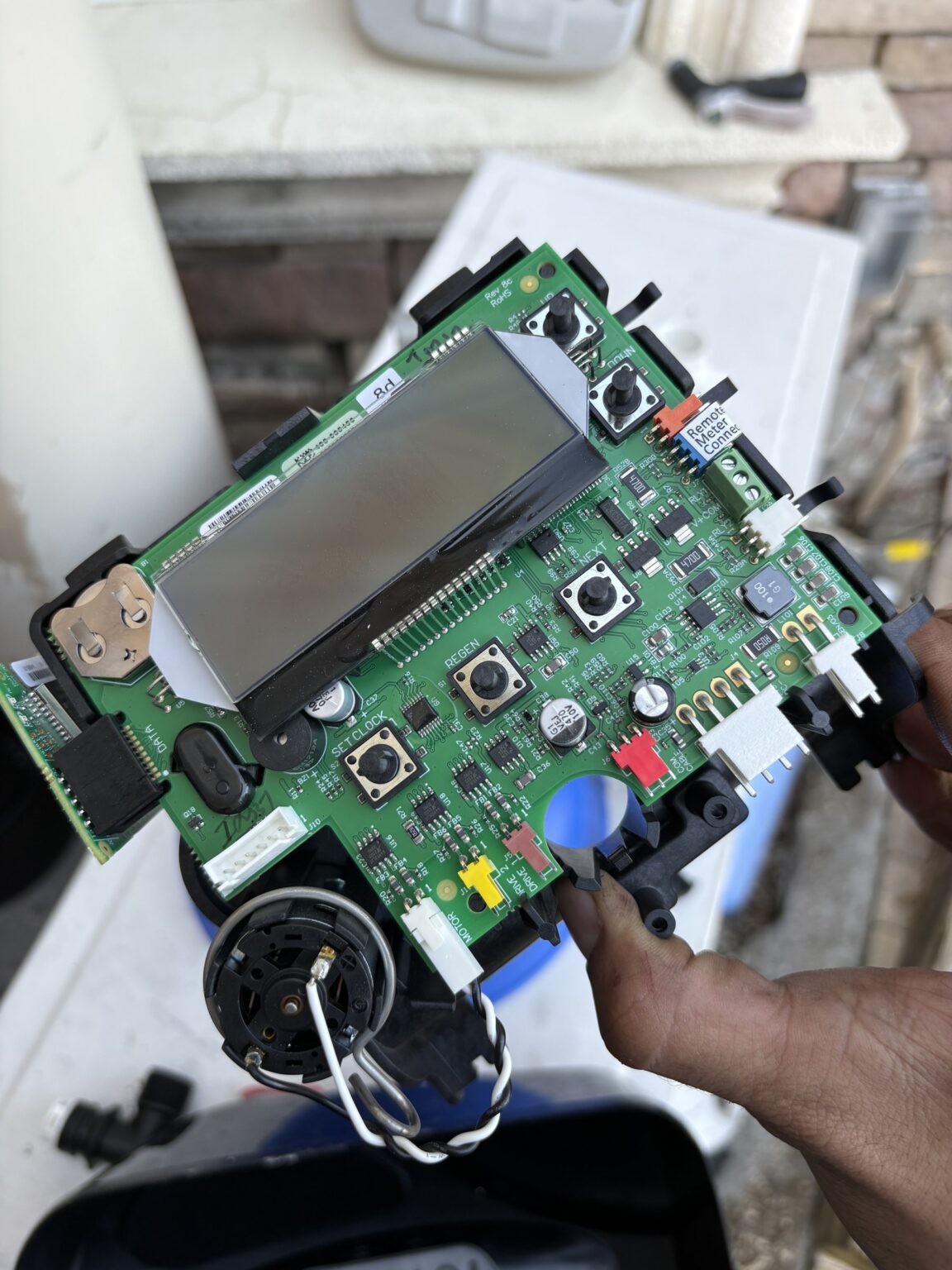
The University of Nebraska-Lincoln says brine generally takes 60 to 120 minutes to pass through a softener, so give it time. If the valve does not move, the display is blank, or the drain line stays dry, stop there. That is a control valve, a circuit board or a blocked line, and those are service and repair jobs. Softer water should return within a day of a good cycle.
Could the resin be worn out or fouled?
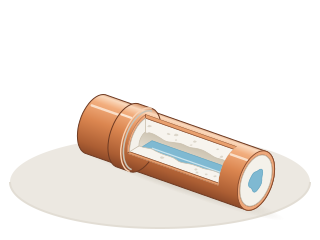
Resin can be fouled or worn when the first four checks pass and the water is still hard. Iron is the usual culprit on a well: UF/IFAS Extension says iron and manganese decrease the efficiency of cation exchange softeners. On city water, chloramine slowly breaks resin down over the years.
You cannot see this from outside the tank, so it takes a test and a look inside. Resin beads in the toilet tank or at a faucet screen are a clue. A resin change or a valve rebuild can give a sound tank years more service, so ask about both before anyone quotes a new system.
When is it the sizing, or time for a new softener?
Sizing is the last suspect, and it shows up when a softener works fine until the house gets busy. More people, a new bathroom or a move from one supply to another can outgrow a system sized for someone else. A test, your household size and the math tell you quickly.
We repair when one part failed, rebuild when the tank is sound and the valve or resin is tired, and replace only when the tank or the sizing is wrong. If it does come to that, our water softener replacement page explains how we size the next one.
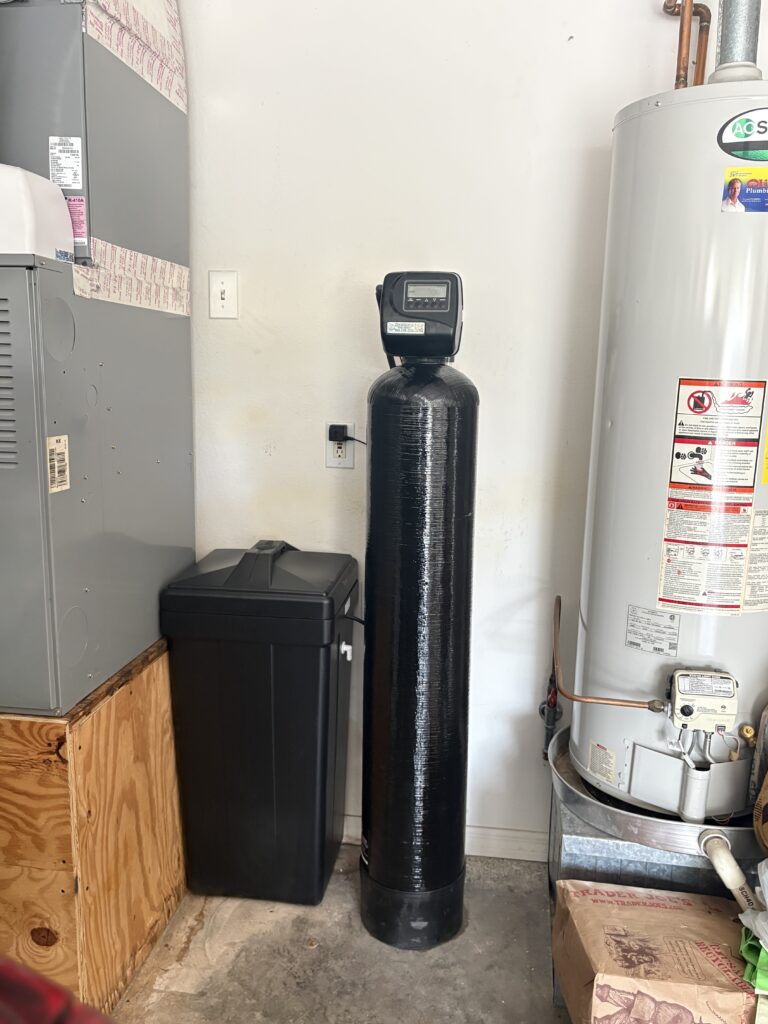
Take a household like the Delacroix family in Wesley Chapel, who bought a house with a mystery softener in the garage, no manual and a hard crust of salt. They worked down the list. The bypass was fine, and the broom handle broke a bridge. The spots improved for a week and came back.
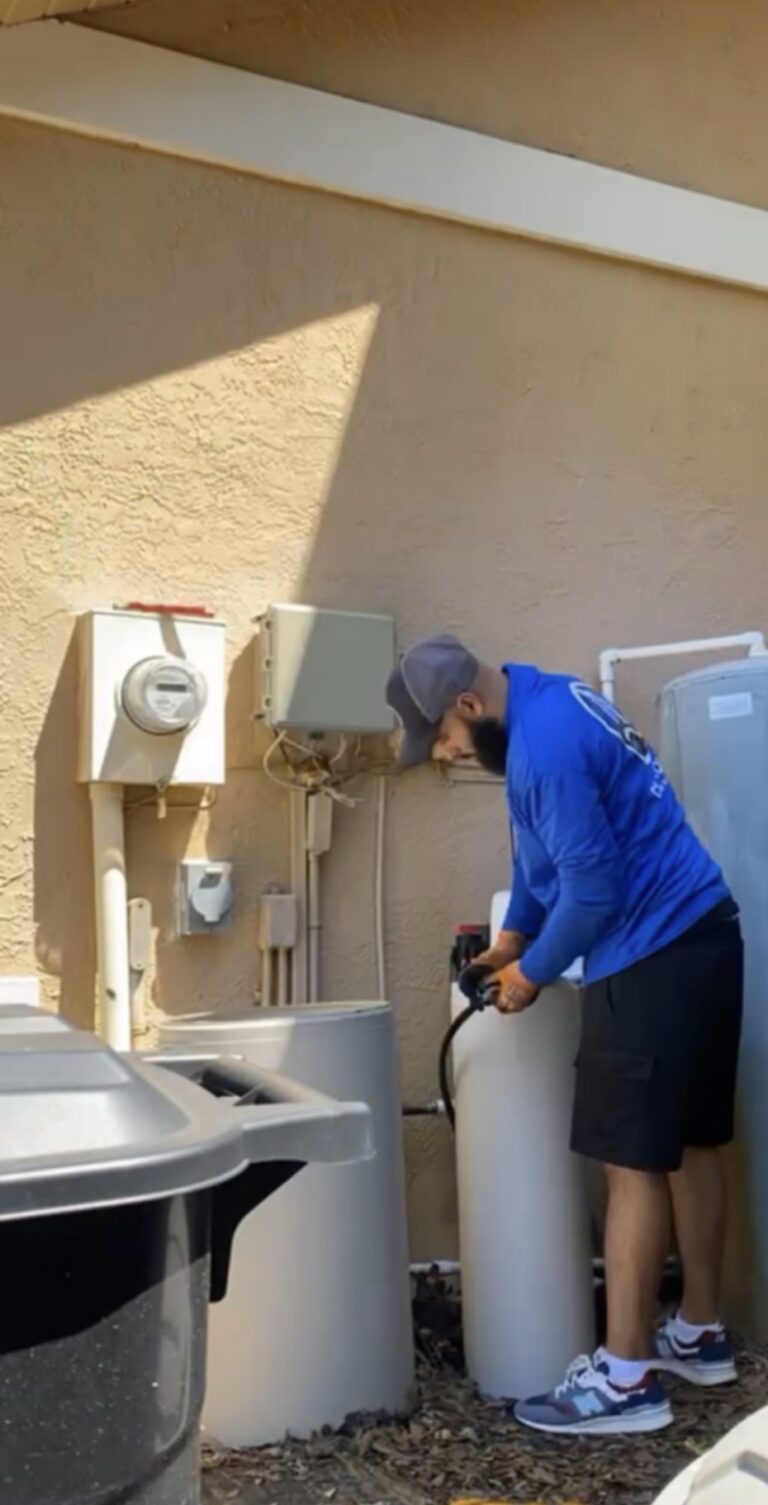
At the free in-home water test, the softened water still reads hard, and the valve turns out to be set for far less hardness than the house has. We correct the setting and run a regeneration, and the softener catches up within a day. The whole fix was a number on a screen that nobody had looked at since the last owner. We make the same visit across our Tampa Bay service area.
Frequently asked questions
How do I know if my water softener has stopped working?
You can tell a water softener has stopped working when spots return on glass, soap stops lathering and scale builds up again. Salt that never drops is another sign. A hardness test at the tap confirms it, and our free in-home water test includes one.
Why do I still have hard water with a water softener?
Hard water usually gets past a softener because of a bypass valve left open, a low hardness setting, a salt bridge or a missed regeneration. Tired resin and undersizing come after those, so work through the cheap checks first.
How do I reset a water softener?
Most softeners reset by setting the clock, confirming the hardness setting and starting a manual regeneration from the valve. The steps differ by brand, so find the model on the valve head and follow its manual. Some valves also hold settings through a power cut.
Can a water softener go bad?
A water softener can wear out, though many faults are smaller than that. A quality, properly sized and maintained softener in Florida generally lasts 10 to 15 years, and a resin change or a valve rebuild can extend a sound tank's service.
How much salt should a water softener use?
Salt use depends on your hardness, your water use and the softener's settings, so no single figure fits every home. The University of Nebraska-Lincoln says a unit using more salt than expected should have its settings checked by a service provider.
Should I repair or replace a water softener that stopped working?
Repair a softener when one part failed, rebuild it when the tank is sound and the valve or resin is tired, and replace it only when the tank or the sizing is wrong. A test tells you which one you have.
Still no soft water after all six checks?
You have done the free part. We'll find the fault that is left, with a repair-first answer and no pressure.
Free Water Test & Consultation: an in-home, multi-point test with the results explained on the spot. Best for confirming whether the softener is failing, or iron or chloramine is behind it.
Book a free water testService & Repair: rebuilds, re-bedding and repairs on most major brands, Kinetico, Culligan and RainSoft among them. Best for a softener that fails these checks, because not everything needs replacing.
Service and repair
Call or text (813) 729-2125, or book your free water test online. No pressure, no obligation - just answers.