| Cause | What you notice | First check |
|---|---|---|
| Salt bridge | Salt level stuck, spots coming back | Push a broom handle through the salt |
| Mushy salt | Thick sludge at the bottom of the tank | Feel the bottom with the handle |
| Bypass valve | Hard water, softener looks normal | Turn the bypass back to service |
| Clock or settings | No regeneration, or at the wrong hour | Check the time and the hardness setting |
| Injector or brine line | Salt stays put after a regeneration | Book a service visit |
| Low water use | Salt drops slowly, water stays soft | Nothing: a metered valve saves salt |
Bottom line: Most of these checks need nothing more than a broom handle and a look at the valve.
Why is my water softener not using salt?
A water softener stops using salt for one of five reasons: a salt bridge, mushy salt, a bypass valve left on bypass, a clock or setting that keeps it from regenerating, or a clogged injector or brine line. A sixth case is no fault at all, since a household that uses less water uses less salt on a metered softener.
The salt only matters as brine. During regeneration, the softener draws brine from the salt tank to rinse calcium and magnesium off its resin. With no brine, the resin fills with hardness and the spots come back, even though the softener still runs its cycle.
Our water softener service and repair page lists the same suspects for a softener that stopped working, plus a failed control valve or circuit board, a blocked drain line and fouled resin. More fixes for tired equipment live in our service and repair guides.
How do I check for a salt bridge and break it safely?
Push a broom handle straight down through the middle of the salt. If it meets a hard layer and then drops into open space, you have a salt bridge. Tap the crust loose around its edges, lift out the big chunks, and run a regeneration so the softener makes fresh brine.
- Lift the lid and note how full the salt looks.
- Push a broom handle down through the center of the salt.
- A hard layer with a hollow drop under it is a bridge. Tap it loose around the edges, and go easy near the plastic tank walls.
- Scoop out the large chunks so they don't fuse together again.
- Start a manual regeneration. On a Fleck SXT valve, the manual says to hold the Extra Cycle button for five seconds; other valves use other buttons, so check yours.
Salt pulls moisture out of the air and cakes, the way a salt shaker clumps in a Florida summer, and a bridge is that clump on a bigger scale. Fill the tank part way and top it up more often. Our installation page makes the same point: topping up before the salt runs low keeps the softener working between visits.
Potassium chloride bridges more than ordinary salt. The Water Quality Association's guide, Getting Smart with Softeners, says potassium chloride "has also been known to form salt bridges more readily" than sodium chloride, and that regeneration needs a 13 to 15% higher concentration of it. If you switched to potassium, check for a bridge more often.
Is mushy salt clogging the bottom of the brine tank?
Mushy salt is salt that has dissolved and settled into a thick sludge at the bottom of the brine tank. The sludge can choke the brine flow, so the salt above it sits unused. If your broom handle sinks into paste at the bottom instead of resting on loose pellets, mush is the cause.
Nebraska Extension's water softening guide, G1491, says the brine tank needs periodic checking and cleaning, and that how often depends on the type and amount of salt and the water you treat. The same guide warns that rock salt can carry impurities that cut regeneration and plug valves, and it says to use the salt type your softener's maker recommends.
The fix is unglamorous. Scoop out the mush, rinse the tank, and refill with the pellets your manual names. Sludge wears on the rest of the softener too, which our post on what kills a water softener early covers.
Could the softener be in bypass, set wrong or skipping regeneration?
A water softener in bypass, on a wrong clock or with a wrong setting can stop using salt with nothing wrong in the tank. A bypass valve turned to bypass sends hard water around the softener, so it never needs salt. A wrong clock or setting can make the softener regenerate at the wrong hour or not at all.
Check the bypass first. Our service page says a bypass valve turned to bypass looks exactly like a dead softener.
Then look at the clock. Pentair's Fleck SXT service manual says the timer keeps time for at least 48 hours in a power outage, that the time of day flashes after a power failure, and that the control will not start a new regeneration without line power. A storm-season outage longer than two days is a good reason to read the clock. The same manual lists an error code that means the system has not regenerated for more than 99 days.
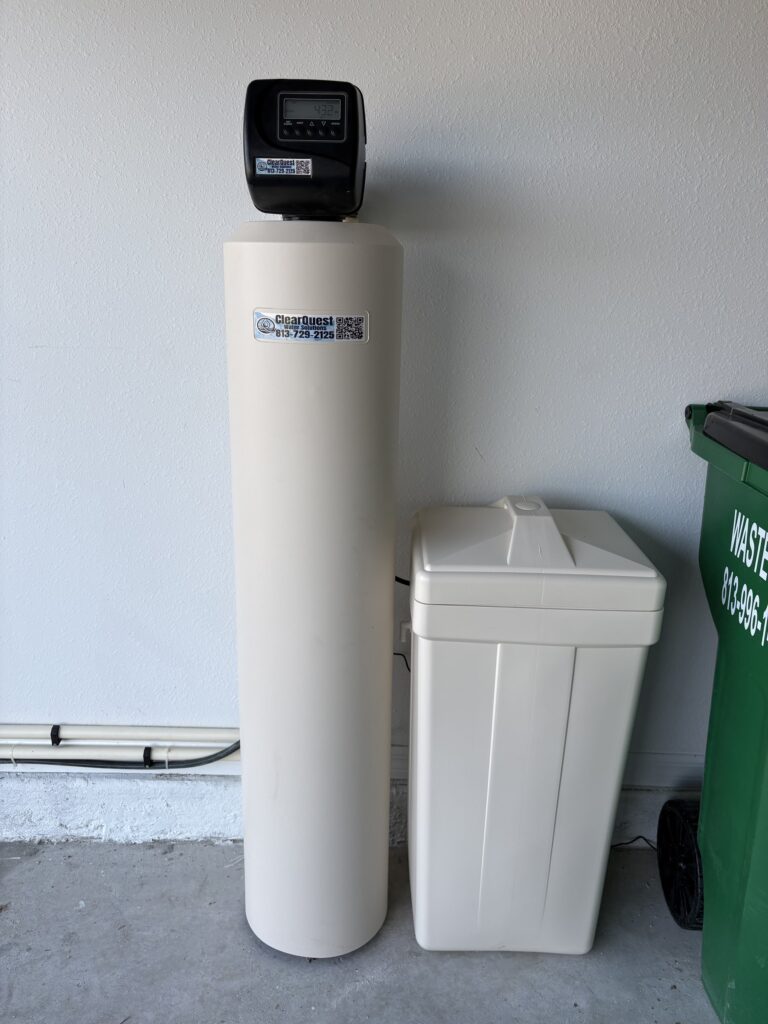
A hardness setting below your real hardness also cuts salt use, and the hard water comes back between cycles.
Could a clogged injector or brine line stop salt use?
A clogged injector or a blocked brine line can stop a water softener from using salt. The injector is the small part in the control valve that pulls brine out of the salt tank during regeneration. When sediment blocks it, or the brine line kinks or cracks, no brine moves, and the salt level sits still while the valve runs its cycle.
One sign is water standing high in the brine tank after a regeneration, because the softener refilled the tank but never drew the brine out. Our service page lists a full brine tank among the symptoms that point to a specific part. Nebraska Extension's G1491 says the brine valve and float assembly, where a softener has one, should be cleaned and inspected at least once a year.
Check the brine line yourself for kinks and loose fittings. The injector sits inside the control valve, so most people book that one.
How much salt should a water softener use on Tampa Bay water?
Most families add a 40-lb bag every 6 to 10 weeks, according to ClearQuest's water softener installation page. Your own pace moves with your water's hardness, how much water your household uses and the way your softener decides to regenerate, so a slow month is not always a fault.
Our own readings across Tampa Bay, a convenience sample we published in September 2026, run 9 to 18 grains per gallon of hardness. A home near the top of that range goes through salt faster than one near the bottom, which is why sizing and settings start from a real test. Our guide to what size water softener you need walks through that math.
| Factor | Uses salt faster | Uses salt slower |
|---|---|---|
| Hardness | Water near 18 grains per gallon | Water near 9 grains per gallon |
| Household water use | Guests, laundry days | A half-empty house |
| Valve type | Timer on a fixed schedule | Metered valve counting gallons |
| Regenerant | Potassium chloride | Sodium chloride |
The valve row comes from our installation page: a timer regenerates whether you used water or not, while a metered valve counts the gallons, so a quiet week costs less salt. If carrying 40-lb bags is the hard part, we offer salt delivery with no delivery fees.
When should you stop troubleshooting and book a repair?
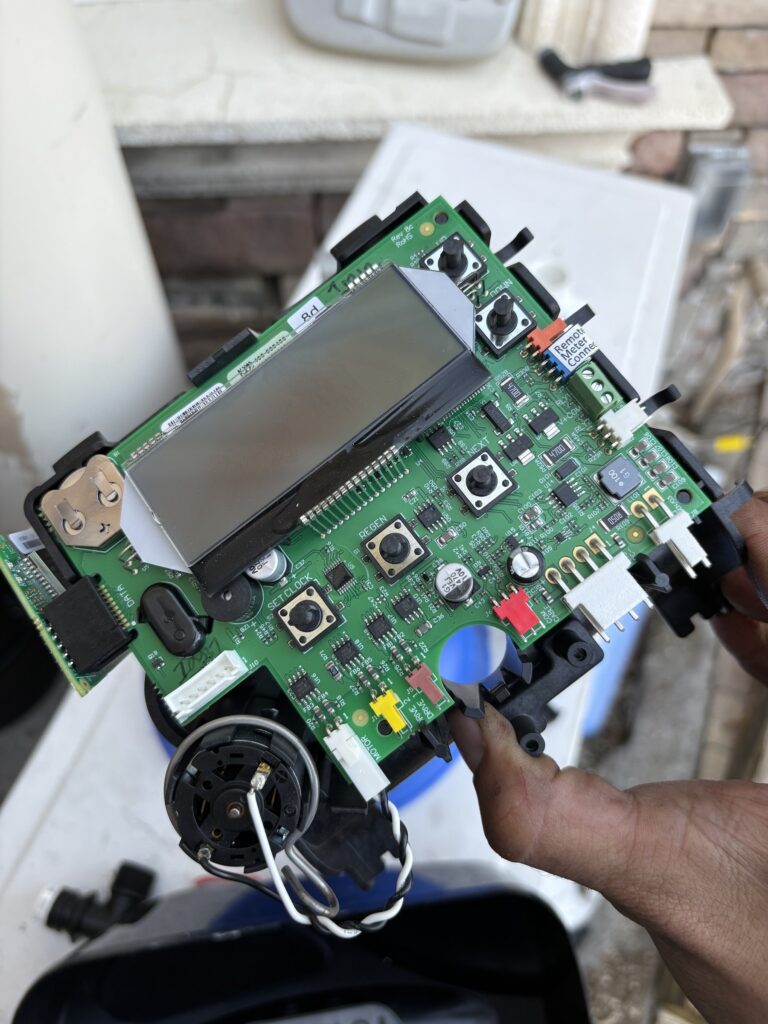
Book a repair when you have broken any bridge, cleared any mush, checked the bypass and the clock, run a regeneration, and the salt still does not move within a week or two. That points at the injector, the brine line, the control valve or the circuit board, and those need parts and an opened valve.
On a service call we start with an evaluation, so you understand the problem and your options before you spend anything, and most repairs finish in a single visit with parts on the truck. Our service and repair page states the visit fee: "A flat $89 covers travel and full inspection. It's waived if you approve a repair the same day." If a tune-up beats a new system, we say so.
Take a household like the Thibodeaux family in Dade City. Their softener is twelve years old, they switched to potassium chloride to cut the sodium in their softened water, and all summer the salt line never moved. Spots came back on the shower glass, and another company quoted a full replacement.
Before signing, they push a broom handle through the salt. It breaks a crust a third of the way down, and the bottom feels like wet cement. We clear the bridge and the mush, clean the injector screen, set the hardness to their test result and run a regeneration. The salt starts dropping that week, and they keep the old softener. Our Dade City water quality guide covers what their city's report says.
A twelve-year-old softener that stops using salt is often a softener with a crust in its brine tank, and a broom handle costs less than a quote.
Frequently asked questions
Why is my water softener not using salt?
A water softener stops using salt because of a salt bridge, mushy salt, a bypass valve left on bypass, a clock or setting that stops regeneration, or a clogged injector or brine line. Low water use on a metered softener also slows salt use, and that is normal.
How do I know if I have a salt bridge?
Push a broom handle straight down through the salt. If it meets a hard crust and then drops into open space, you have a salt bridge. Tap the crust loose, lift out the chunks and run a regeneration.
Is it a problem if my water softener isn't using salt?
A water softener that isn't using salt usually isn't softening, because the resin needs brine to recharge. Hard water spots and scale come back, so find the cause instead of waiting.
Does potassium chloride cause more salt bridges?
The Water Quality Association says potassium chloride has been known to form salt bridges more readily than sodium chloride. It also needs a 13 to 15% higher concentration for regeneration, so check a potassium brine tank more often.
How much salt should a water softener use?
Most families on a high-efficiency softener add a 40-lb bag every 6 to 10 weeks, according to ClearQuest's water softener installation page. Harder water, more people and a timer valve use salt faster.
Why is my water softener not regenerating?
A water softener stops regenerating when the bypass is on, the clock is wrong after a power outage, a setting is off, or the valve has failed. On a Fleck SXT, Pentair's manual says the clock flashes after an outage.
Is your softener still not using salt?
Start with the broom handle and the bypass valve. If the salt still won't move, we'll find the part, with a repair-first answer and no pressure.
Free Water Test & Consultation: an in-home, multi-point test with the results explained on the spot. Best for checking that your softener's hardness setting matches your water.
Book a free water testService & Repair: rebuilds, re-bedding and repairs on most major brands, Kinetico, Culligan and RainSoft among them. Best for a salt level that won't move after the home checks.
Service and repairHigh-Efficiency Water Softener: a metered softener sized to your household. Best for a softener that is past saving.
Water softener installation
Call or text (813) 729-2125, or book your free water test online. No pressure, no obligation - just answers.